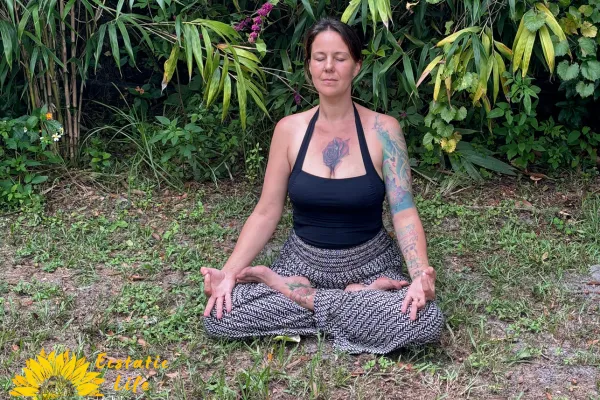
Mindfulness Meditation for Healing Sexual Trauma
What follows is an excerpt from my study The Mindful Journey: Using the Extraordinary Power of Paying Attention to Heal the Wounds of Sexual Trauma, originally published for the USF St. Petersburg Honors Program Theses (2015).

When I was 14 years old, I was raped by two young men at a high school party. I didn't realize it that night – in fact, like many victims of sexual assault, I felt very isolated – but right then I became a statistic. Though I felt very alone in my trauma, I am a part of a very large number of women who have experienced sexual assault in their lifetime. One in six American women, according to the Department of Justice's National Violence Against Women Survey (NVAWS), have lived through a sexual assault. The physical and psychological consequences of sexual assault (collectively called sexual trauma) are numerous and well documented. Physical symptoms include chronic pelvic pain, premenstrual syndrome, gastrointestinal disorders, chronic pain disorders, sexually transmitted infections, and unwanted pregnancies. The psychological repercussions are numerous and can be similar to other forms of trauma (such as from exposure to war or natural disasters), including post-traumatic stress disorder (PTSD), disassociation, anxiety disorders, guilt, phobias, substance abuse, sleep disturbance, depression, rumination, relationship difficulties, and suicide. Other psychological outcomes are specific to sexual trauma, such as sexual dysfunction and revictimization.
As well as physical and psychological repercussions, there are social consequences which sexual assault victims suffer. These types of crimes are stigmatized, meaning that society often places the burden of shame or disgrace on the victim. Many times, victims are treated differently by friends and family, compounding feelings of guilt and increasing trauma. It is common for the community to attribute some kind of provocation to the victim, and, in turn, victims internalize blame. The social stigma surrounding sexual assault may also be one of the reasons many victims are afraid to report attacks or abuse.

I chronically suffered from many of the aforementioned after-effects of my sexual assault for over a decade, even without being fully aware of my symptoms. About ten years after my incident, I attempted to begin my healing process. I began sessions of psychotherapy and hypnotherapy, and enrolled in school to study psychology. This helped to free me from the worst of my symptoms, but I didn't feel that the therapy sessions got to the core of my suffering, nor did they help me to maintain that progress in the face of severe stressors. Indeed, mental health professionals have noted the limitations of psychotherapy alone for treating trauma survivors. Talking about my experiences and becoming informed about my responses helped me to identify my problems and allowed me the space and understanding to move forward. However, I didn't feel that this mode of treatment truly worked to heal my being.
Several years into my healing journey, I came across a study looking for participants for a mindfulness-based stress reduction (MBSR) intervention for female survivors of interpersonal violence (IPV). The concept of this class was modeled on the classic MBSR course, which utilizes mindfulness meditation and yoga to address a variety of chronic disorders and diseases, but with components specifically developed for female IPV (including rape and other forms of sexual violence) survivors. As a survivor of IPV, I was lucky to be able to participate in this eight week study. I believe the work done in and around these sessions was the grass-roots of a change in perspective of myself, my trauma, and my relationship with life.
There was an intensive practice component of mindfulness meditation during each weekly TIMBSR class, with daily mindfulness practices assigned to do at home throughout the following week. This included formal meditations, in which the state of the body and mind are acknowledged and observed nonjudgmentally, and informal exercises, in which you fully attend to present moment, both designed to cultivate the state and trait of mindfulness.

So, what exactly is mindfulness? First, I believe it is important to understand that all people are capable of mindfulness – it is part of what makes us human! Let’s look at it like this: we can break down mindfulness to mean mindful awareness, which is being aware of awareness, or the awareness of self and the capacity to reflect. I believe a good working definition of mindfulness could be an awareness of and attention to your present experience. Executive Director of the Center for Mindfulness in Medicine, Health Care, and Society, Saki Santorelli, has defined mindfulness as “our capacity to pay attention, moment to moment, on purpose”. Authors Susan Smalley, PhD, founder and director of UCLA's Mindful Awareness Research Center (MARC), and Diana Winston, director of Mindfulness Education at MARC, inform us in their book, Fully Present, that “mindfulness has become a secular tool for investigating the modern mind” (2010, pg xv). And, in fact, mindfulness-based programs, such as MBSR, have evolved into a common form of complementary and alternative medicines (CAM), and mindfulness as a lifestyle is becoming quite popular.
“We are sick with fascination for the useful tools of names and numbers, of symbols, signs, conceptions and ideas. Meditation is therefore the art of suspending verbal and symbolic thinking for a time, somewhat as a courteous audience will stop talking when a concert is about to begin.”
–Alan Watts
Want support with beginning a mindfulness practice? I’m happy to help!
